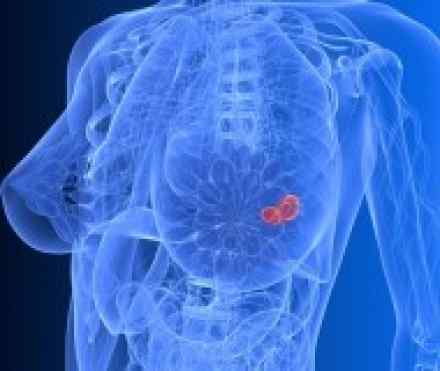
What is it?
- Breast cysts are fluid-filled sacs within your breast. You can have one or many breast cysts. They're often described as round or oval lumps with distinct edges. In texture, a breast cyst usually feels like a soft grape or a water-filled balloon, but sometimes a breast cyst feels firm.
- Breast cysts are common in women in their 30s and 40s. If you have breast cysts, they usually disappear after menopause, unless you're taking hormone therapy.
- Breast cysts don't require treatment unless a cyst is large and painful or otherwise uncomfortable. In that case, draining the fluid from a breast cyst can ease your symptoms.
Symptoms
Signs and symptoms of breast cysts include:
- A smooth, easily movable round or oval breast lump with distinct edges
- Breast pain or tenderness in the area of the breast lump
- Increase in breast lump size and breast tenderness just before your period
- Decrease in breast lump size and resolution of other signs and symptoms after your period
Having one or many simple breast cysts doesn't increase your risk of breast cancer.
Causes
Each of your breasts contains 15 to 20 lobes of glandular tissue, arranged like the petals of a daisy. The lobes are further divided into smaller lobules that produce milk during pregnancy and breast-feeding. Small ducts conduct the milk to a reservoir just beneath your nipple. Supporting this network is a deeper layer of connective tissue called stroma.
Breast cysts develop when an overgrowth of glands and connective tissue (fibrocystic changes) block milk ducts, causing them to dilate and fill with fluid.
- Microcysts are too small to feel but may be seen during imaging tests, such as mammography or ultrasound.
- Macrocysts are large enough to be felt and can grow to about 1 to 2 inches (2.5 to 5 centimeters) in diameter. Large breast cysts can put pressure on nearby breast tissue, causing breast pain or discomfort.
The cause of breast cysts remains unknown. Some evidence suggests that excess estrogen in your body may play a role in breast cyst development.
Diagnosis
Screening and diagnosis of a breast cyst usually begins after you or your doctor has identified a breast lump. The process may involve the following tests or exams:
- Clinical breast exam. Your doctor physically examines the breast lump and checks for any other problem areas in your breasts. Questions to anticipate include when you first noticed the lump, whether its size has changed, if you have any breast pain associated with the breast lump, whether you have nipple discharge and how your menstrual cycle affects the lump. However, your doctor can't tell from a clinical breast exam alone whether a breast lump is a cyst, so you'll need another test, either an imaging test or fine-needle aspiration.
- Breast ultrasound. Breast ultrasound can help your doctor determine whether a breast lump is fluid-filled or solid. The radiologist — a doctor trained to perform imaging exams and procedures — performing the ultrasound makes this determination based on certain characteristics seen during the imaging exam. A fluid-filled area usually indicates a breast cyst. A solid-appearing mass most likely is a noncancerous lesion, such as a fibroadenoma, but solid lesions could also be breast cancer. Based on what they see on the ultrasound, your doctor and radiologist might recommend a biopsy to further evaluate a solid-appearing mass. If your doctor can easily feel a breast lump, he or she may skip breast ultrasound and perform fine-needle aspiration instead.
- Fine-needle aspiration. During this procedure, your doctor inserts a thin needle into the breast lump and attempts to withdraw (aspirate) fluid. If fluid comes out and the breast lump goes away, your doctor can make a breast cyst diagnosis immediately. Unless there appears to be blood in the fluid, it requires no further testing or treatment after draining. If the fluid is bloody, a laboratory may need to test it. Lack of fluid or a breast lump that doesn't disappear after aspiration suggests that the breast lump — or at least a portion of it — is solid, and a sample of cells may be collected and sent for analysis to check for the presence of cancer (fine-needle aspiration biopsy).
Treatments and drugs
No treatment is necessary for simple breast cysts. Your doctor may recommend nothing more than closely monitoring a breast cyst to see if it resolves on its own.
Fine-needle aspiration
Fine-needle aspiration, the procedure used to diagnose a breast cyst, also may serve as treatment, if your doctor removes all the fluid from the cyst at the time of diagnosis, your breast lump disappears and your symptoms resolve.
First, your doctor feels your breast to locate the cyst and hold it steady. Next, he or she inserts a thin needle into the breast lump and withdraws (aspirates) the cyst fluid. Often, fine-needle aspiration is done using ultrasound to guide accurate placement of the needle.
- If the fluid is nonbloody and the breast lump disappears, you need no further treatment.
- If the fluid appears bloody or the breast lump doesn't disappear, your doctor may send a sample of the fluid for laboratory testing and refer you to a breast surgeon or to a radiologist for follow-up.
- If no fluid is withdrawn, your doctor will likely recommend an imaging test — such as mammography or ultrasound — and possibly a biopsy to further evaluate the lump.
If you have breast cysts, you may need to have fluid drained more than once. Recurrent or new cysts are common.
Hormone use
Using oral contraceptives to regulate your menstrual cycles may help reduce the recurrence of breast cysts. Discontinuing hormone replacement therapy during the postmenopausal years may reduce the formation of cysts as well.
Surgery
Surgical removal of a breast cyst is necessary only in a few unusual circumstances. If an uncomfortable breast cyst recurs month after month, or if a breast cyst contains blood-tinged fluid and displays other worrisome signs, surgery may be considered.
Lifestyle remedies
To minimize discomfort associated with breast cysts, you might try these measures:
- Wear a supportive bra. If you have breast pain from a breast cyst, good support to surrounding breast tissue may help relieve some discomfort.
- Avoid caffeine. There's no scientific proof that caffeine consumption is linked to breast cysts. However, many women find relief from their symptoms after eliminating caffeine from their diets. Consider reducing or eliminating caffeine — in beverages as well as in foods such as chocolate — to see if your symptoms improve.
- Reduce salt in your diet. Although studies on salt restriction and cyst formation aren't conclusive, some experts suggest that reducing salt in your diet may help. Consuming less sodium reduces the amount of excess fluid retained by your body, which in turn may help alleviate symptoms associated with a fluid-filled breast cyst.
Alternative medicine
Evening primrose oil is a fatty acid (linoleic acid) supplement that's available over-the-counter. Some evidence suggests that evening primrose oil, taken alone or in combination with vitamin E, may help minimize cyclic breast pain that can be associated with breast cysts. Although the exact mechanism isn't clear, experts believe that women deficient in linoleic acid are more sensitive to hormonal fluctuations during the menstrual cycle, resulting in breast pain associated with breast cysts.
References:
http://www.healthline.com/health/fibrocystic-breast-disease
https://en.wikipedia.org/wiki/Breast_cyst
http://www.nationalbreastcancer.org/cyst-in-breast
https://www.breastcancercare.org.uk/publications/benign-breast-conditions/breast-cysts-bcc73
http://www.irishhealth.com/article.html?con=49
 Print This Page